


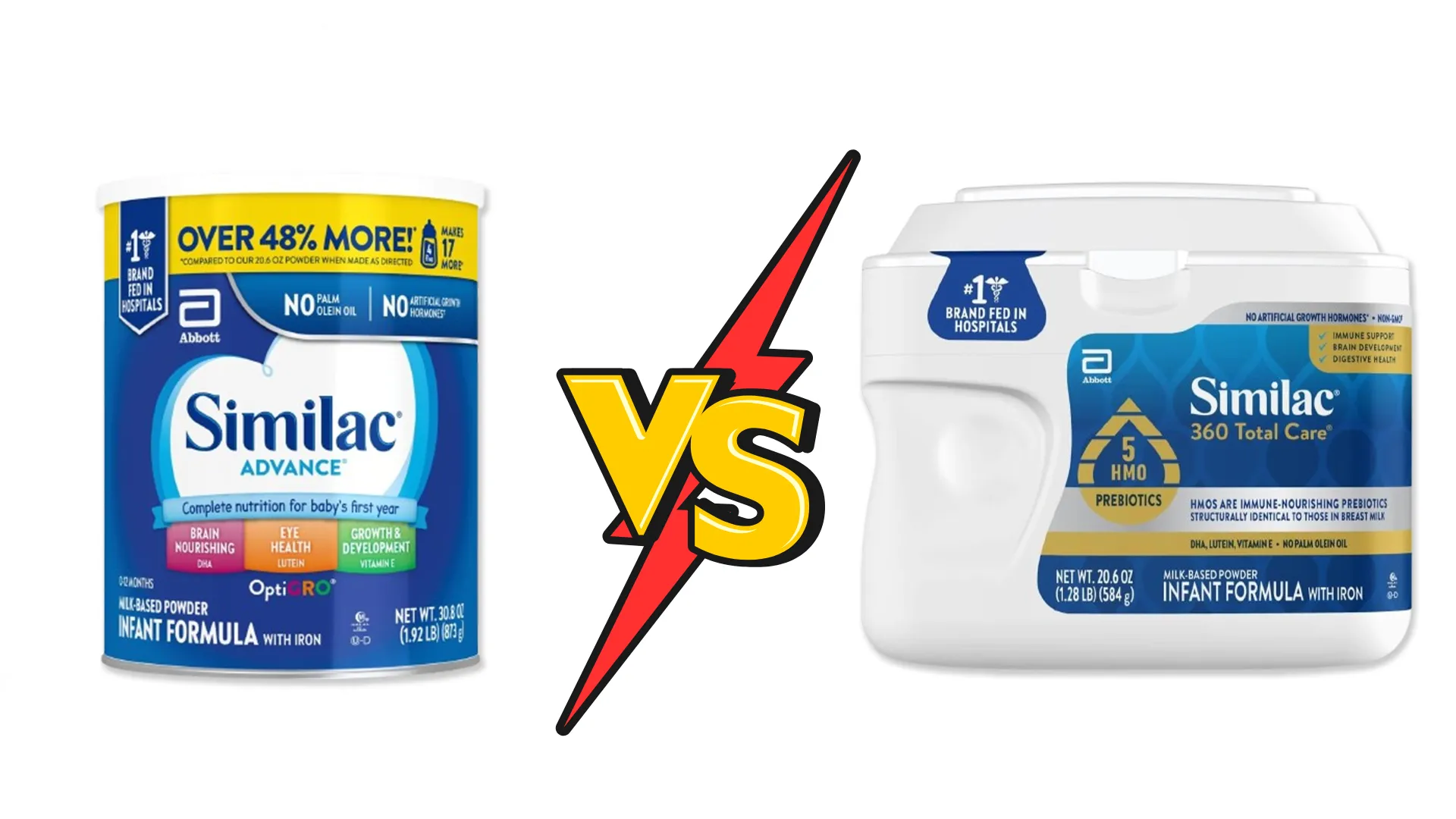
Picking the right baby formula can feel like a big task. I know how confusing it can be when two formulas look almost the same. I wanted to take a closer look at Similac Advance vs Similac 360 Total Care to see what really sets them apart. Both offer key nutrients, but their prebiotic blends caught my eye. Let’s look at the details and see which one may suit your baby’s needs.
Similac Advance Review
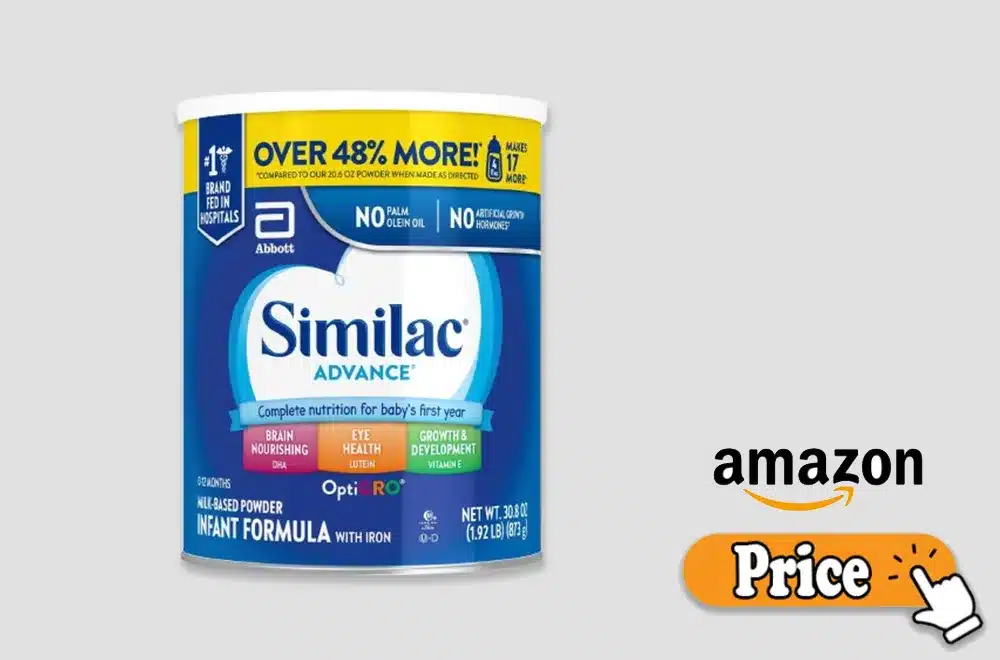
This is a standard, milk-based formula with iron. It has key nutrients to support normal growth and development. I also found DHA, lutein, and vitamin E on its ingredient list. Another nice feature is its GOS prebiotic blend, which helps support gut health.
Pros and Cons
Here are the main things I like and a few things parents should know.
Pros
- Contains DHA for brain and eye development.
- Has lutein to support eye health.
- Includes vitamin E to support developing cells.
- Contains GOS prebiotics for digestive health.
- Provides iron and key vitamins and minerals.
- Has no palm olein oil.
- Offers complete infant nutrition.
Cons
- Does not contain HMOs.
- Contains milk and soy ingredients.
- May not suit babies with milk or soy allergies.
- Does not work the same way for every baby.
- Is not made for babies who need a special medical formula.
What I Like About Its Nutrition
When I looked at the ingredient list, I found that this formula covers many basic needs. It has DHA, lutein, and vitamin E. These three nutrients form its OptiGRO blend. I also noticed GOS, which is a type of prebiotic. It helps feed good gut bacteria.
Another thing worth noting is that it has no palm olein oil. It also has iron, calcium, and other key nutrients. I would say it is a solid choice to consider if a baby does well on standard milk-based formula. Still, every baby is different, so I would watch for any signs of poor feeding or discomfort.
Recommendation
I would consider this formula for parents who want a standard option with key nutrients and GOS prebiotics.
Who this product is perfect for
- Parents looking for a standard milk-based formula.
- Babies who need iron-fortified infant formula.
- Parents who want DHA, lutein, and vitamin E.
- Babies who do well with GOS prebiotics.
- Families looking for a simple formula with key nutrients.
Who should avoid it
- Babies with a cow’s milk protein allergy.
- Babies with a soy allergy.
- Babies with galactosemia.
- Babies who need a special medical formula.
- Babies whose doctor has advised against standard milk-based formula.
Similac 360 Total Care Review
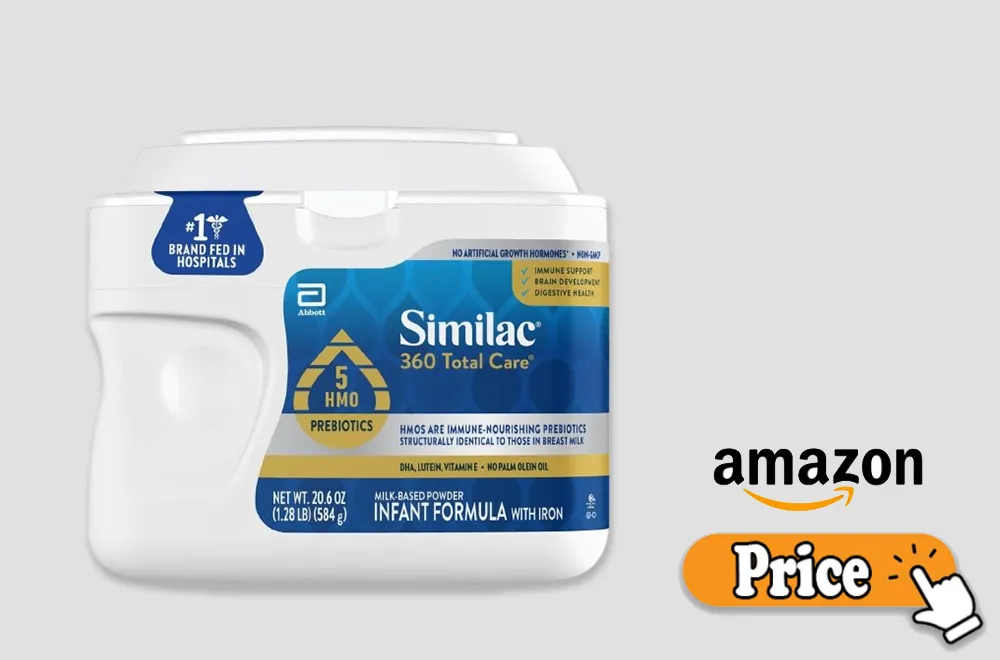
This formula caught my eye because of its five-HMO prebiotic blend. HMOs are special sugars found naturally in breast milk. They help support gut health and the developing immune system. It also has DHA, lutein, vitamin E, and iron. When I looked at its ingredients, the five HMOs were the biggest difference from the standard formula.
Pros and Cons
Let’s look at the good points and a few things worth thinking about.
Pros
- Contains five HMO prebiotics.
- Has DHA for brain and eye development.
- Includes lutein and vitamin E.
- Provides iron and key vitamins and minerals.
- Has no palm olein oil.
- Supports normal growth and development.
- Is made to provide complete infant nutrition.
Cons
- May cost more than Similac Advance.
- Contains milk and soy ingredients.
- May not suit babies with certain food allergies.
- The five HMOs do not guarantee less gas or fussiness.
- May not offer a clear benefit for every baby.
What Makes Its HMO Blend Special?
The first thing I noticed was the five-HMO blend. It contains five types of HMOs that are also found in breast milk. These are 2′-FL, LNT, 3-FL, 6′-SL, and 3′-SL. They are added to help support gut health and the developing immune system.
I also like that it has DHA, lutein, and vitamin E. So, it does not leave out the key nutrients found in the other formula. However, I would not say that five HMOs make it the best choice for every baby. It is an extra feature, not a promise of better digestion or fewer feeding issues.
Recommendation
I would consider this formula for parents who want a standard infant formula with a wider range of prebiotics.
Who this product is perfect for
- Parents who want five HMO prebiotics in baby formula.
- Babies who need a standard milk-based formula.
- Parents who want DHA, lutein, and vitamin E.
- Babies who already tolerate milk-based formula.
- Families who prefer a formula with added HMO ingredients.
Who should avoid it
- Babies with a cow’s milk protein allergy.
- Babies with a soy allergy.
- Babies with galactosemia.
- Babies who need a special medical formula.
- Babies whose doctor has advised against standard milk-based formula.
Detailed Comparison for Similac Advance vs Similac 360 Total Care
Now, let’s get into the main differences. I compared both formulas based on their ingredients, digestive support, brain development nutrients, immune support, and value. These points can help make the choice a little easier.
1. Ingredients: Similac Advance vs Similac 360 Total Care
The ingredient list is the first place I would look when comparing these two formulas. Both use milk-based ingredients and lactose as a main source of carbohydrates. They also contain oils, vitamins, minerals, and key nutrients.
The biggest difference is their prebiotic blend. Similac Advance has GOS, while Similac 360 Total Care has five HMOs. Both also contain DHA, lutein, and vitamin E. So, the main difference is not basic nutrition. It is the type and range of prebiotics.
My comparison: I would give Similac 360 Total Care a small edge for its five-HMO blend. Similac Advance still offers a good range of key nutrients.
Similac Advance Rating: 8.5/10
Similac 360 Total Care Rating: 9.5/10
2. Digestive Support: Similac Advance vs Similac 360 Total Care
Digestive comfort is a big concern for many parents. Gas, spit-up, and changes in bowel movements can make feeding time stressful. That is why I think it is worth looking at the prebiotics in both formulas.
Similac Advance has GOS, which helps feed good gut bacteria. Similac 360 Total Care has five HMOs. These are designed to support the gut environment and healthy bacteria. Both offer prebiotic support, but the ingredients work in different ways.
My comparison: Similac 360 Total Care has a wider prebiotic blend. However, more prebiotics do not mean every baby will have less gas or better bowel movements.
Similac Advance Rating: 8.5/10
Similac 360 Total Care Rating: 9.5/10
3. Brain and Eye Development: Similac Advance vs Similac 360 Total Care
This is one area where I found very little difference. Both formulas contain DHA, lutein, and vitamin E. DHA is an omega-3 fat that plays a role in brain and eye development. Lutein helps support eye health.
Vitamin E also plays a key role in protecting developing cells. These nutrients are important during a baby’s early growth. I like that both formulas include them. So, I would not pay extra for 360 Total Care just because I thought it had a clear advantage in this area.
My comparison: Both formulas offer similar key nutrients for brain and eye development. I would call this one a tie.
Similac Advance Rating: 9/10
Similac 360 Total Care Rating: 9/10
4. Immune Support: Similac Advance vs Similac 360 Total Care
A baby’s immune system is still growing during the early months. So, I wanted to see what each formula offers in this area. Both contain vitamins, minerals, and other nutrients that support normal growth and immune function.
But there is one key difference. Similac 360 Total Care has five HMOs. These are prebiotics found naturally in breast milk. They help support the growth of good gut bacteria and the developing immune system. Similac Advance has GOS instead, so it does not offer the same HMO blend.
My comparison: Similac 360 Total Care gets an edge here because of its five HMOs. Still, this does not mean it prevents illness or guarantees stronger immunity.
Similac Advance Rating: 8/10
Similac 360 Total Care Rating: 9.5/10
5. Price and Overall Value: Similac Advance vs Similac 360 Total Care
Price is another thing I would think about before making a choice. Baby formula is a regular cost, so even a small price gap can add up over time. Similac Advance may be the more budget-friendly option, while Similac 360 Total Care may cost more due to its added HMO blend.
But I would not judge a formula by price alone. I would check the cost per prepared ounce and compare the package sizes. I would also think about how well the baby tolerates it. There is no point paying more for extra features if they do not offer a clear benefit for your baby’s needs.
My comparison: Similac Advance may offer better value for parents who want standard infant nutrition. Similac 360 Total Care may suit parents who prefer five HMO prebiotics and are happy with the added cost.
Similac Advance Rating: 9.5/10
Similac 360 Total Care Rating: 8.5/10
Conclusion
After comparing Similac Advance vs Similac 360 Total Care, I found that both offer key nutrients for a baby’s growth. The biggest difference is their prebiotic blend. Similac Advance has GOS, while Similac 360 Total Care has five HMOs. I would choose based on the baby’s needs, feeding comfort, and family budget. A formula with more added features is not always the better choice for every baby.