


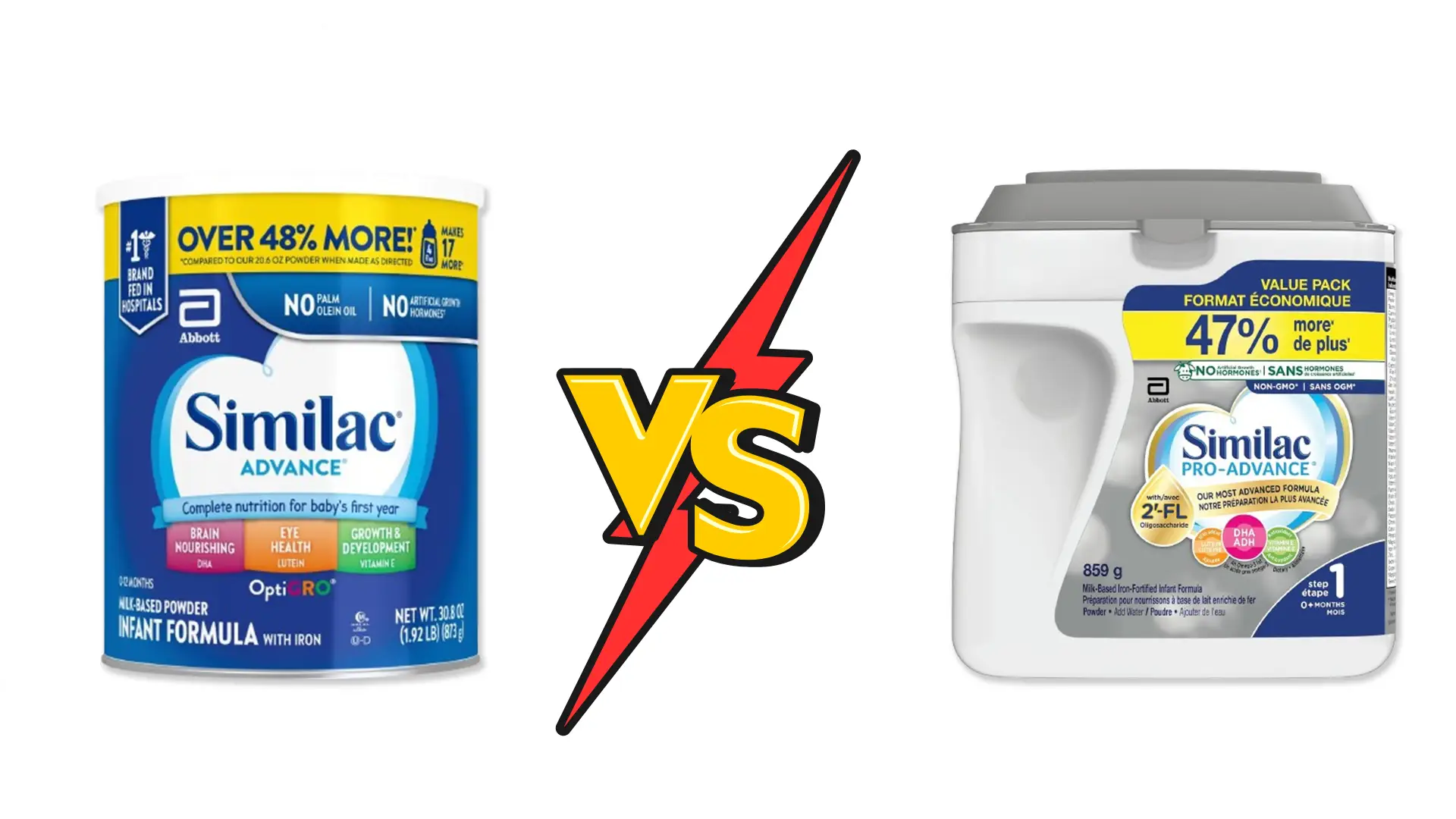
Choosing between two baby formulas from the same brand can be harder than it sounds. I wanted to know whether Similac Advance or Similac Pro Advance offered better value and nutrition. Both have key nutrients for a baby’s growth, but their ingredients are not quite the same. After comparing their formulas, I found a few details that can help parents make a more informed choice.
Similac Advance Review
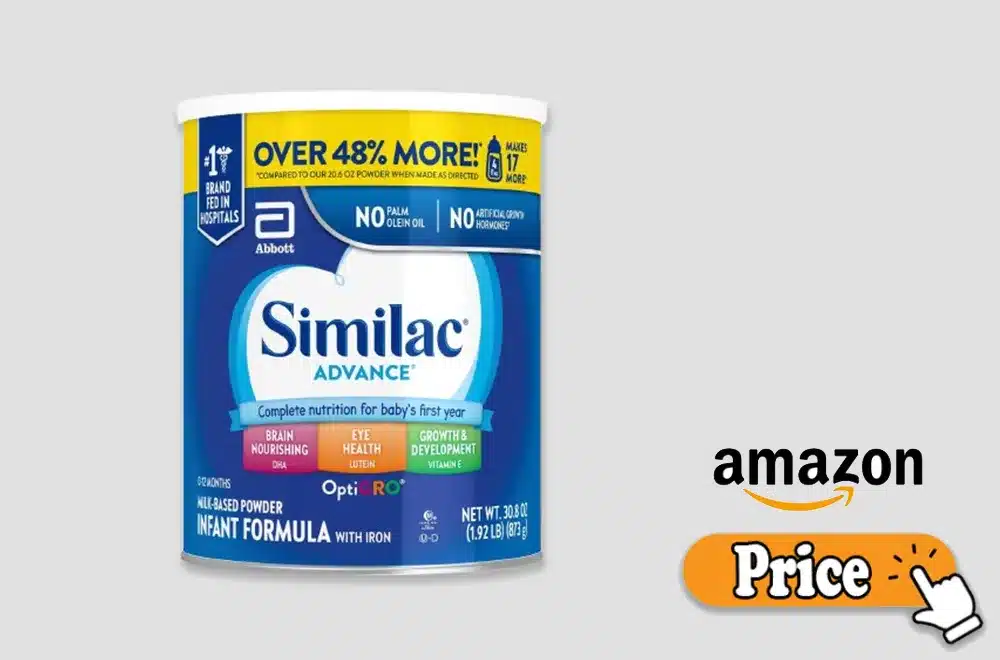
When I looked closely at Similac Advance, I found it to be a standard, milk-based infant formula with iron. It contains key nutrients that support normal growth and development. It also has DHA, lutein, and vitamin E. One thing I liked about its ingredient list was the use of prebiotics to support digestive health.
Pros and Cons
Here are the main things I noticed while reviewing this formula.
Pros
- Contains DHA to support brain and eye development.
- Has lutein and vitamin E.
- Includes prebiotics for digestive health.
- Contains iron and other key vitamins and minerals.
- Has no palm olein oil.
- Offers a complete source of nutrition for infants when prepared as directed.
Cons
- Does not contain 2′-FL HMO.
- Contains milk and soy ingredients.
- May not suit babies with certain food allergies.
- Some babies may need time to adjust to a new formula.
What Stands Out About Similac Advance
What caught my attention about Similac Advance was its simple approach to infant nutrition. It has the basic nutrients I would look for in a standard baby formula. DHA, lutein, and vitamin E are part of its OptiGRO blend. It also has galactooligosaccharides (GOS), a type of prebiotic.
I also like that it does not contain palm olein oil. The formula provides calcium, iron, protein, and fat to support normal growth. However, I would not expect every baby to react to it in the same way. A formula that works well for one baby may not work as well for another.
Recommendation
I would consider Similac Advance a suitable option for parents looking for a standard, iron-fortified infant formula. Here is who may find it worth considering.
Who this product is perfect for
- Parents looking for a standard milk-based infant formula.
- Babies who need an iron-fortified formula.
- Parents who want DHA, lutein, and vitamin E in one formula.
- Families looking for a formula with GOS prebiotics.
- Babies who already tolerate its main ingredients.
Who should avoid it
- Babies with a diagnosed cow’s milk protein allergy.
- Babies with galactosemia.
- Babies who need a special medical formula.
- Babies whose doctor has advised against standard milk-based formula.
Similac Pro Advance Review
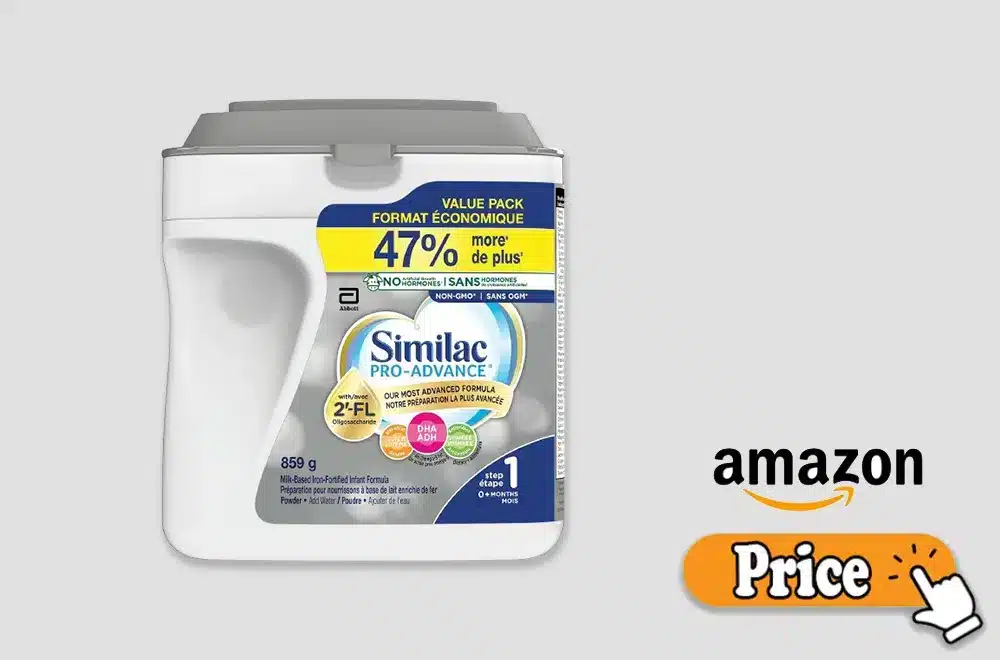
Similac Pro Advance caught my attention because it has one extra ingredient that makes it different from regular Similac Advance. That ingredient is 2′-FL HMO, a type of human milk oligosaccharide. It is designed to provide another form of prebiotic support. The formula also contains DHA, lutein, and vitamin E. When I compared the two ingredient lists, this was the biggest difference I noticed.
Pros and Cons
Let’s look at what makes this formula stand out and what parents should keep in mind.
Pros
- Contains 2′-FL HMO, a type of prebiotic.
- Provides DHA for brain and eye development.
- Contains lutein and vitamin E.
- Includes iron and essential vitamins and minerals.
- Has no palm olein oil.
- Provides complete infant nutrition when prepared as directed.
Cons
- May cost more than regular Similac Advance.
- Contains milk and soy ingredients.
- Is not suitable for babies with certain food allergies.
- The extra HMO does not guarantee better digestion.
- May not offer a noticeable benefit for every baby.
What Makes Similac Pro Advance Different?
The biggest thing I noticed about Similac Pro Advance was its 2′-FL HMO content. This ingredient is a type of prebiotic found naturally in human milk. However, the 2′-FL used in this formula is not taken from human milk. It is added as an ingredient.
I also found that this formula shares many important nutrients with Similac Advance. Both contain DHA, lutein, vitamin E, iron, and other nutrients. So, the difference is not that one has all the good nutrients and the other does not. The main difference is the added HMO. I would see this as an extra feature, not a promise that every baby will do better with it.
Recommendation
I would consider Similac Pro Advance for parents who want a standard infant formula with added 2′-FL HMO. Still, the best choice depends on the baby’s needs.
Who this product is perfect for
- Parents who want 2′-FL HMO in their baby’s formula.
- Babies who need a standard, iron-fortified milk-based formula.
- Parents who want DHA, lutein, and vitamin E.
- Babies who already tolerate milk-based formulas.
- Families who are comfortable with its price.
Who should avoid it
- Babies with a diagnosed cow’s milk protein allergy.
- Babies with galactosemia.
- Babies who need a special medical formula.
- Babies whose doctor has advised against this type of formula.
Detailed Comparison for Similac Advance vs Similac Pro Advance
Now comes the part that matters most. When I compared Similac Advance vs Similac Pro Advance, I found that both formulas share many important features. However, a few differences may help parents decide which one fits their needs.
1. Ingredients: Similac Advance vs Similac Pro Advance
Ingredients were the first thing I wanted to compare. Both formulas use milk-based ingredients and provide key nutrients for infant growth. They also contain DHA, lutein, vitamin E, and other vitamins and minerals.
The biggest difference is the type of prebiotic. Similac Advance contains GOS, while Similac Pro Advance includes 2′-FL HMO. This gives Pro Advance an extra ingredient that is worth knowing about. Still, having more types of prebiotics does not automatically make a formula better for every baby.
My comparison: Similac Advance offers a good range of key nutrients, while Similac Pro Advance adds 2′-FL HMO. I would give Pro Advance a slight edge for its added prebiotic feature.
Similac Advance Rating: 8.5/10
Similac Pro Advance Rating: 9/10
2. Digestive Support: Similac Advance vs Similac Pro Advance
Digestive comfort is one of the biggest concerns I hear about when parents compare baby formulas. A baby may have gas, spit-up, or changes in bowel movements after starting a new formula. So, I think this is an important point to consider.
Similac Advance contains GOS, which is a prebiotic that supports digestive health. Similac Pro Advance contains 2′-FL HMO, which offers another type of prebiotic support. Both ingredients are designed to support the baby’s gut environment. However, neither formula guarantees less gas, less spit-up, or easier bowel movements.
My comparison: Both formulas offer prebiotic support. Pro Advance has the added 2′-FL HMO feature, but I would not assume it will always provide better digestive comfort.
Similac Advance Rating: 8.5/10
Similac Pro Advance Rating: 9/10
3. Brain and Eye Development: Similac Advance vs Similac Pro Advance
When it comes to brain and eye development, I was happy to see that both formulas contain important nutrients. DHA is an omega-3 fatty acid linked to brain and eye development. Lutein also plays a role in eye health.
Both formulas include vitamin E as well. This vitamin helps protect developing cells. I did not find a major difference between the two in this area. Both offer the same general OptiGRO nutrient blend, so parents do not need to assume that Pro Advance is better just because its name sounds more advanced.
My comparison: I would put both formulas on nearly equal ground for their key brain and eye nutrients. Neither has a clear advantage based on these shared features.
Similac Advance Rating: 9/10
Similac Pro Advance Rating: 9/10
4. Immune Support: Similac Advance vs Similac Pro Advance
Immune support is another area where these two formulas differ. Both provide nutrients that help support normal growth and the developing immune system. They also contain iron, vitamins, and other essential nutrients.
However, Similac Pro Advance has an added feature. Its 2′-FL HMO is a prebiotic that is also found naturally in human milk. Research on certain HMOs suggests they can support an infant’s developing immune system. Similac Advance contains GOS but does not have 2′-FL HMO.
My comparison: Pro Advance gets a small advantage here because of its added HMO. But this does not mean it prevents infections or guarantees stronger immunity.
Similac Advance Rating: 8/10
Similac Pro Advance Rating: 9/10
5. Price and Overall Value: Similac Advance vs Similac Pro Advance
Price is something I would always consider before choosing a baby formula. Feeding a baby is a regular expense, and the cost can add up over time. Similac Advance may be the more budget-friendly choice, while Pro Advance may cost more because of its added HMO feature.
Still, prices can change based on the package size, store, and available offers. I would compare the cost per prepared ounce rather than just looking at the price on the can. That gives a much fairer idea of what each formula costs.
My comparison: Similac Advance may offer better value for parents who want a standard formula with key nutrients. Pro Advance may be worth the extra cost for parents who prefer the added 2′-FL HMO.
Similac Advance Rating: 9/10
Similac Pro Advance Rating: 8.5/10
Conclusion
After comparing Similac Advance vs Similac Pro Advance, I found that both are standard infant formulas with many shared nutrients. The biggest difference is the added 2′-FL HMO in Pro Advance. I would not say one is always better than the other. My choice would depend on the baby’s needs, tolerance, and the advice of a pediatrician. A higher price or an extra ingredient does not always mean a better result for every baby.